So, there's a lot going on around the internet these days about the violent protests against the Sudanese and Eritrean refugees in South Tel Aviv. Before I say anything, violent protests against anyone or any group of people are inappropriate, and this particular aspect of the African immigration issue represents an embarrassment to Israel. Simple as that.
All that said, I'd like to add a few more dimensions to the story that are rarely written about in the news that are circulating in places like Facebook, Twitter, and other social media outlets. For what reason, I have no idea.
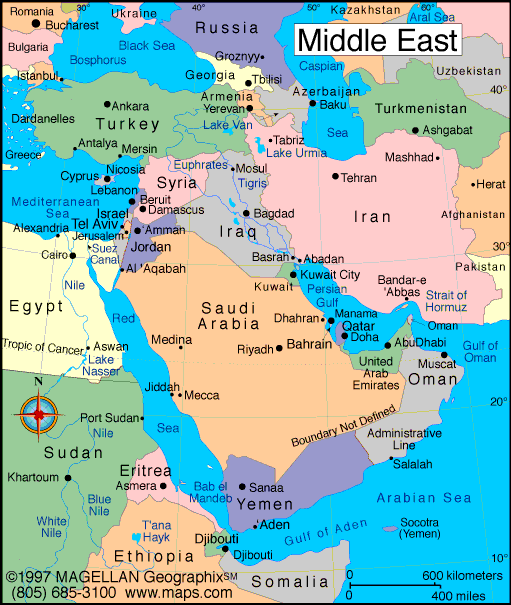
 Israel is a tiny country the size of Rhode Island surrounded on all sides by much larger countries - Egypt, Saudi Arabia, Jordan, Syria, to name a few. I suggest everyone take a look at a map because the amount of press coverage Israel gets makes it seem as if its size dwarfs these other countries. Each of these other countries is Muslim, contains an incredible amount of land mass, and many of them are closer to Sudan and Eritrea than Israel. In fact, the Africans have to cross all the way through Egypt and the Sinai in order to get to Israel. So why don't they just cross the border of their home country and become refugees in Egypt?
Because in Egypt they will get killed, they will be treated poorly, or they will have little or no work prospects. Check this out: The influx of Africans to Israel began in 2005 after the Egyptian police attacked Sudanese refugees who were camped out in Cairo and demanded asylum. More than 20 people were killed, and word spread that Israel would provide them a better welcome and more job opportunities.
Essentially, the Sudanese are moving to Israel because, according to one of the first Sudanese to cross the border from Egypt to Israel, "In Israel Sudanese can earn $4 per hour. In Egypt such a wage is unheard of. Moreover, medical care and educational opportunities are far better in Israel than in Egypt."
Like all of us, the African migrants are seeking a better lot in life. But, when it comes to Israel, they're doing it illegally. The vast majority of Sudanese migrants in Israel do not have refugee status - they are simply considered illegal immigrants. Why? Because Sudan is a "hostile state" to Israel, and for obvious reasons, accepting a large influx of their population could create a dangerous situation domestically within the State of Israel.
Despite the fact that these migrants are not labeled as refugees, over the past ten years, Israel has accepted approximately 200,000 Sudanese migrants, and is officially housing 15,000 of them in centers through the country. Most of the migrants are living in South Tel Aviv. They are allowed to work in Israel, and employers are not fined for employing illegal Sudanese migrants. Last time I checked, you can't hire an illegal immigrant in the United States...
Last thing I'd like to mention is the hullaballoo over Israel building a fence to slow the flow of migrants entering the country from Egypt's Sinai. Let's first consider that the United States has done the exact same thing. Let's also consider that preventing massive influx of illegal immigrants into any country is a priority of national security, particularly if those illegal immigrants are arriving from an "enemy state."
Like I said before, the protests were inappropriate. The best way to deal with an issue like this is through political process. Citizens must begin to make their feelings known to politicians, and the politicians must take it upon themselves to devise a plan to give the best treatment possible to migrants who have already arrived in Israel and to curb future migration to Israel in a responsible way. Fueling hatred and anger against a group of people will only increase the likelihood of domestic problems in the future.
All that said, I'd like to add a few more dimensions to the story that are rarely written about in the news that are circulating in places like Facebook, Twitter, and other social media outlets. For what reason, I have no idea.
Because in Egypt they will get killed, they will be treated poorly, or they will have little or no work prospects. Check this out: The influx of Africans to Israel began in 2005 after the Egyptian police attacked Sudanese refugees who were camped out in Cairo and demanded asylum. More than 20 people were killed, and word spread that Israel would provide them a better welcome and more job opportunities.
Essentially, the Sudanese are moving to Israel because, according to one of the first Sudanese to cross the border from Egypt to Israel, "In Israel Sudanese can earn $4 per hour. In Egypt such a wage is unheard of. Moreover, medical care and educational opportunities are far better in Israel than in Egypt."
Like all of us, the African migrants are seeking a better lot in life. But, when it comes to Israel, they're doing it illegally. The vast majority of Sudanese migrants in Israel do not have refugee status - they are simply considered illegal immigrants. Why? Because Sudan is a "hostile state" to Israel, and for obvious reasons, accepting a large influx of their population could create a dangerous situation domestically within the State of Israel.
Despite the fact that these migrants are not labeled as refugees, over the past ten years, Israel has accepted approximately 200,000 Sudanese migrants, and is officially housing 15,000 of them in centers through the country. Most of the migrants are living in South Tel Aviv. They are allowed to work in Israel, and employers are not fined for employing illegal Sudanese migrants. Last time I checked, you can't hire an illegal immigrant in the United States...
Last thing I'd like to mention is the hullaballoo over Israel building a fence to slow the flow of migrants entering the country from Egypt's Sinai. Let's first consider that the United States has done the exact same thing. Let's also consider that preventing massive influx of illegal immigrants into any country is a priority of national security, particularly if those illegal immigrants are arriving from an "enemy state."
Like I said before, the protests were inappropriate. The best way to deal with an issue like this is through political process. Citizens must begin to make their feelings known to politicians, and the politicians must take it upon themselves to devise a plan to give the best treatment possible to migrants who have already arrived in Israel and to curb future migration to Israel in a responsible way. Fueling hatred and anger against a group of people will only increase the likelihood of domestic problems in the future.


